



Executive protection is often reduced to the visible presence of close protection personnel and their ability to respond when an incident occurs. That view significantly understates the scope of the function.
In a corporate environment, executive protection is better understood as a structured, intelligence-led and repeatable risk management programme. Its purpose is to protect the principal while enabling business activity, travel and private life to continue with the minimum necessary disruption.
Close protection is one component of this wider function. Depending on the principal’s risk profile and operating environment, an executive protection programme may also include protective intelligence, threat and vulnerability assessment, advance work, journey management, operational security and information discipline, medical contingency planning, residential security and coordination with the principal’s office and the wider corporate security function.
It is also important to distinguish between the client and the principal. The client may be a company, family office or other organisation commissioning the service. The principal is the individual receiving protection. In some assignments, they are the same person. In others, they are not. This distinction is also recognised in the UK Security Industry Authority’s close protection knowledge and skills specification.
Effective executive protection is therefore not limited to maintaining a physical presence around an individual. It involves planning, anticipation, information control, management of exposure, access, movement and timing, and the ability to make sound decisions under pressure.
When delivered effectively, much of this work remains invisible. The principal is able to pursue their objectives, the organisation retains operational continuity, and risk is managed without allowing the protective function to dominate the environment.
The approach set out below draws on recognised principles of protective risk management, travel risk management and commercial security operations.
1. Security begins before the principal leaves
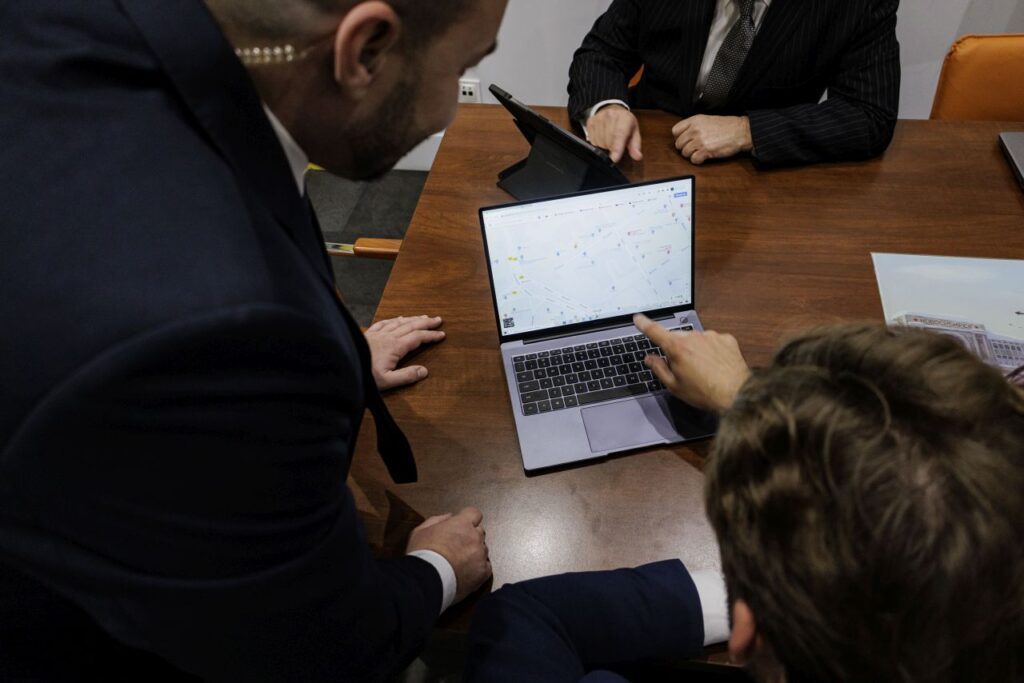
A significant proportion of effective executive protection activity takes place before a meeting, journey or public appearance begins.
Advance work is based on a straightforward principle: risk cannot always be eliminated, but it can often be reduced through informed decisions made before it becomes an operational problem.
Effective preparation normally includes three core elements.
Understanding the purpose and context
The protective team must understand why the principal is attending a particular location and which objectives must be preserved.
These may include:
- conducting a confidential business meeting
- signing an agreement
- attending a public or media-facing event
- maintaining a demanding schedule
- protecting commercially sensitive discussions
- preserving privacy during personal or family activity
Protection should not operate in isolation from these objectives. Its role is to enable the principal’s activity, not to impose controls detached from the commercial or personal context.
A protective arrangement that appears secure in theory but prevents the principal from achieving the purpose of the day cannot be regarded as operationally effective.
Security should support the principal’s objectives while reducing exposure to a level that is proportionate to the assessed risk.
Threat, vulnerability and impact assessment
Risk is shaped by the interaction of three factors:
- the threats or hazards that may cause harm
- the vulnerabilities that may increase the likelihood or impact of an incident
- the potential consequences for the principal and the organisation
A professional assessment should establish a realistic risk picture rather than concentrate exclusively on high-impact attack scenarios.
It should consider routine but potentially disruptive events, including:
- congestion and crowding
- aggressive or intrusive individuals
- interpersonal conflict
- protest activity
- media pressure
- transport disruption
- medical incidents
- information exposure
- failures of access control or coordination
Where relevant to the operating environment, the assessment should also address more serious contingencies, including targeted violence, organised criminal activity, kidnapping, terrorism, major civil disruption and infrastructure failure.
Risk assessment should not be treated as a static document completed before deployment and then set aside. It should support advance planning and inform dynamic risk assessment throughout the assignment.
Changes to the schedule, venue, route, participants or wider environment may materially alter the principal’s exposure and require the plan to be adjusted.
Planning with viable alternatives
A primary plan is necessary, but a plan without alternatives is fragile.
Depending on the assignment, the protective plan may include:
- primary and secondary routes
- alternative access and exit points
- primary and reserve vehicle positions
- alternative collection points
- medical support options
- safe locations or temporary holding areas
- procedures for unplanned changes to the principal’s schedule
When conditions deteriorate, the team should not be forced to invent a solution under pressure. It should be able to transition to a previously considered and operationally viable alternative.
Contingency arrangements are not an optional appendix to the plan. They are part of the plan.
Effective planning also requires clear decision authority. The team should understand:
- who may authorise a route change
- who may recommend or initiate the early termination of an engagement
- who controls movement during an emergency
- who communicates with the principal’s office
- who coordinates logistics, medical support and external assistance
- when a decision must be escalated to the client organisation
Ambiguity at critical decision points can create delay, conflicting instructions and unnecessary exposure.
The operating model should therefore include structured briefings, handovers and debriefings. Current intelligence, roles, responsibilities, resources, communication arrangements and relevant lessons should be confirmed before, during and after the assignment.
Local emergency arrangements and venue-specific procedures must also be considered. These may include alarm systems, evacuation procedures, access restrictions, safe areas and the division of responsibility between the protective team, venue security and public authorities.
2. Situational awareness and early identification of risk
Situational awareness is the ability to observe, interpret and anticipate developments in the operating environment.
It is fundamental to executive protection because many incidents do not begin with an obvious act of violence. They develop through indicators that may initially appear insignificant: a change in behaviour, repeated observation, an unusual movement pattern, a person or vehicle that does not fit the context, or increasing tension within a crowd.
In practice, effective situational awareness involves:
- observing discreetly without creating unnecessary tension
- understanding what is normal for the location and activity
- identifying anomalies and assessing their relevance
- maintaining a shared operational picture within the team
- adapting positioning, timing or movement before escalation occurs
Identifying a potential concern does not automatically require confrontation.
In many cases, a minor adjustment to the route, timing, team position or principal’s exposure is sufficient to reduce risk without disrupting the activity. The objective is to retain control, not to display authority or force.
Situational awareness also applies to the condition of the protective team itself. Fatigue, stress, distraction and information overload can degrade judgement and reduce the ability to identify meaningful changes in the environment.
In complex locations such as airports, hotels, public events and media-heavy venues, performance is supported by concise communication, clearly understood procedures and consistent decision-making.
This is where interpersonal, communication and cognitive skills produce tangible operational results: earlier identification of risk, greater freedom of movement and more time to make effective decisions.
Where the threat profile justifies it, reducing predictability may also be necessary. Variation in routes, timings and movement patterns can make hostile surveillance and attack planning more difficult.
Such measures should remain proportionate to the assessed risk and should not create unnecessary disruption for the principal.
3. Managing exposure in public and semi-public environments
In public and semi-public environments, protective control is achieved through a combination of advance planning, stakeholder coordination, access management, protective positioning and continuous assessment of the principal’s exposure.
Protective positioning and movement formations are operational tools within that wider approach. Depending on the environment and team size, they may help to:
- maintain an appropriate protective buffer
- improve observation of relevant sectors
- reduce the likelihood of surprise or uncontrolled contact
- preserve movement options
- enable a coordinated response when intervention becomes necessary

Positioning should not be rigid or visually dominant. The team must adapt naturally to doors, stairs, lifts, narrow passages, crowds, access-control points, unexpected stops and changes of direction.
The purpose is not visual symmetry. It is to maintain effective coverage, freedom of movement and the ability to respond without unnecessarily constraining the principal.
Periods of heightened vulnerability often include:
- arrivals and departures, where movement may be predictable
- transitions between vehicles and buildings
- hotel lobbies, receptions, corridors and lifts
- uncontrolled or partially controlled access points
- vehicle loading and collection areas
- public events, demonstrations, queues and media activity
- unscheduled interactions with members of the public
Professional protection enables the principal to function as naturally as circumstances allow.
Overly demonstrative positioning, aggressive communication or unnecessary interference can attract attention, increase tension and create additional operational risk. The protective team should be capable of influencing the environment without appearing to dominate it.
Control is often achieved through coordination, timing and communication rather than physical intervention.
4. Communication and coordination: the operational backbone
Even a highly experienced team can become ineffective when communication is unclear or poorly structured.
Operational communication should be:
- concise and unambiguous
- based on agreed terminology, call signs and procedures
- appropriate to the operating environment
- designed to support timely decisions and coordinated action
- discreet in relation to third parties
- supported by suitable primary and alternative communication channels
Communication must extend beyond the immediate protective team.
In a corporate environment, risk frequently arises from coordination failures rather than deliberate hostile activity. Examples include:
- a schedule change that is not passed to the team
- a meeting moved to a different room
- an unexpected guest
- a vehicle sent to the wrong collection point
- a delayed departure
- an unplanned media engagement
- changes to the principal’s travel arrangements
Information flow should therefore include the protective team, the principal’s office and the relevant representatives of the client organisation.
Depending on the assignment, coordination may also be required with:
- executive assistants
- drivers and transport providers
- reception and venue personnel
- event organisers
- hotel management
- corporate security teams
- technical and medical support
- local security providers
- public authorities
Each party should understand its role and the limits of its responsibility.
Executive protection should not operate as an isolated group positioned beside the principal. It forms part of a wider organisational system.
At programme level, the operating model should define:
- who leads the protective response
- who makes decisions on behalf of the client organisation
- who manages external and internal communication
- who provides logistical and medical support
- how escalation, notification and decision-making are structured
- how communication will be maintained during international travel or disruption
Without this structure, protection may amount to little more than physical presence.
5. Information exposure as an operational risk
Many physical security incidents begin with information exposure.
Details concerning the principal’s schedule, location, route, accommodation or business activity may provide operational value to individuals seeking to monitor, approach, disrupt, coerce or attack them.
Exposure may arise through:
- social media posts
- publicly accessible calendars
- casual conversations
- uncontrolled distribution of itineraries
- location sharing
- insecure communication channels
- unnecessary disclosure by employees, suppliers or event personnel
Information discipline should establish clear and proportionate rules covering:
- who needs access to the schedule
- how much detail each person requires
- when and how information may be distributed
- which communication channels are authorised
- how onward dissemination is restricted
- how route, hotel and travel information is protected
- how changes are communicated and recorded
This is a proportionate measure intended to reduce avoidable information exposure.
The higher the principal’s profile or risk level, the greater the potential value of information concerning their movements and intentions.
Executive protection therefore increasingly requires coordination between physical security, operational security, information security, travel risk management and the principal’s communications environment.
Where travel involves sensitive documents, devices or commercially valuable information, the protective plan should also consider digital exposure, privacy, secure communications and the handling of corporate information outside controlled environments.
6. Travel as an organisational risk
A significant proportion of executive protection activity relates to domestic and international travel.
Travel creates a temporary operating environment in which the principal and the organisation may have reduced control over transport, accommodation, information, medical support and local security arrangements.
Effective travel risk management supports organisational governance and duty-of-care responsibilities by creating a structured process for identifying, assessing and treating travel-related risks.
A mature travel risk management approach may include:
- a travel policy and defined approval process
- pre-travel threat and risk assessment
- assessment of the purpose, destination, timing and traveller profile
- selection and review of transport and accommodation
- route and journey planning
- traveller briefings
- medical and logistical preparation
- monitoring during travel
- defined incident-management procedures
- arrangements for trip interruption, evacuation or relocation
- post-travel reporting and review
The principal value of this approach does not come exclusively from visible or physically robust security measures. It comes from the consistency of the process.
When an organisation has established responsibilities, monitoring arrangements, escalation routes and decision thresholds, it can identify emerging problems earlier and respond more coherently.
ISO 31030 provides organisations with a structured approach to the development, implementation, evaluation and review of travel risk policies and programmes, including threat and hazard identification, risk assessment, and prevention and mitigation strategies.
In an environment of converging geopolitical, social, infrastructural, health and information risks, predictable organisational action becomes a significant security advantage.
Travel planning should therefore consider not only the external risk environment, but also:
- organisational roles and responsibilities
- traveller preparation
- journey management
- health and medical requirements
- operational and information security
- incident communication
- access to local support
- legal and jurisdictional limitations
The authority and permitted actions of private security personnel can vary significantly between countries. Equipment, transport arrangements and preventive measures that are lawful in one jurisdiction may be restricted in another.
A travel security plan must therefore answer two separate questions:
- What may be operationally necessary?
- What is lawful and realistically deliverable in the relevant jurisdiction?
The aim is to protect the traveller while safeguarding the organisation’s people, information, reputation and continuity of operations.
7. Extraction, evacuation and emergency relocation

Extraction, evacuation and relocation are related but distinct protective actions.
Extraction generally involves removing the principal from an immediate or developing threat.
Evacuation is the organised movement of people away from a location or area affected by risk.
Relocation involves moving the principal to a safer or more sustainable location, which may be within the same city, elsewhere in the country or across an international border.
None of these actions should be understood as an uncontrolled withdrawal. They should form part of a planned response intended to reduce exposure and restore operational control.
Effective emergency movement depends on four foundations.
Defined decision triggers
The team must understand which conditions justify ending an activity or moving the principal.
Triggers may include:
- loss of effective control over the immediate environment
- a breach of the agreed security boundary
- escalating aggression or disorder
- credible information concerning a developing threat
- a significant medical event
- loss of safe transport
- deterioration in local security conditions
- inability to maintain a viable route or destination
Decision triggers should be proportionate and sufficiently clear to support action under pressure.
Rehearsed procedures
Movement procedures should be understood and, where appropriate, rehearsed before they are required operationally.
This may include:
- order of movement
- responsibilities within the team
- communication with the principal
- vehicle positioning
- use of alternative exits
- assembly and accountability procedures
- contact with the client organisation
- transfer to medical or public-authority support
Critical procedures should be validated before they are required in a real emergency.
Clear communication
During extraction or evacuation, communication must be concise, calm and directive.
The principal should understand that the movement is controlled and purposeful. The objective is to secure cooperation without generating panic or unnecessary attention.
Viable destinations and alternatives
Removing the principal from one location is not sufficient unless the team knows where the movement will end.
Planning may need to include:
- alternative exits
- primary and secondary routes
- reserve vehicles
- safe locations
- medical facilities
- temporary accommodation
- air or ground transport options
- communication with headquarters and local support
The most effective emergency movements may appear to outsiders to be no more than an ordinary change of plan.
Emergency planning should consider realistic scenarios relevant to the assignment, including civil unrest, targeted harassment, coercion, attempted kidnapping, transport incidents, natural hazards, major infrastructure failures and restrictions on movement.
8. Medical preparedness and operational continuity
On many executive protection assignments, routine medical and safety incidents are more likely to occur than exceptional attack scenarios.
These may include:
- sudden illness
- collapse or fainting
- injury
- severe stress
- road traffic incidents
- crowd-related pressure
- adverse reactions to medication
- exhaustion or dehydration
Medical preparedness should therefore be integrated into the protective plan rather than treated as a separate issue.
Depending on the principal’s needs and the operating environment, this may include:
- appropriate first-response capability
- suitable medical equipment
- knowledge of relevant medical conditions where properly authorised
- identified hospitals and specialist facilities
- access to local emergency services
- medical transport options
- clear communication and escalation procedures
Operational continuity depends not only on the speed of the initial response, but also on the ability of the protective team and client organisation to act coherently after the incident.
A structured response reduces confusion, limits secondary disruption and supports informed decisions about whether the principal’s activities can continue, must be modified or should be suspended.
In commercial executive protection, medical preparedness is both a safety requirement and an important component of service quality.
9. Executive protection as a managed programme
Organisations increasingly treat executive protection as a continuing security programme rather than a series of unrelated assignments.
A programme-based approach provides several advantages.
Governance and accountability
Responsibilities, reporting lines, standards and decision authority are clearly defined.
The organisation understands who owns the programme, who manages operational delivery and who is authorised to accept, reduce or escalate risk.
Operational consistency
The service is delivered through agreed methods and procedures rather than individual habits that vary between personnel, locations or assignments.
Consistency does not require inflexibility. It provides a reliable baseline from which the team can adapt to changing conditions.
Assurance and measurement
An executive protection programme should be measurable and capable of review.
The purpose is not to reduce the protective function to paperwork. It is to assess whether the service is achieving its intended outcomes.
Relevant measures may include:
- the number of schedule changes managed without unnecessary disruption
- response times for critical information
- failures caused by coordination or communication
- availability and effectiveness of contingency options
- compliance with agreed procedures
- quality and timeliness of reporting
- implementation of corrective actions
- feedback from the principal and client organisation
Metrics should be interpreted carefully. A low number of recorded incidents does not automatically prove that a programme is effective, just as a high number of interventions does not necessarily demonstrate good performance.
Measures should support professional judgement rather than replace it.
Continuous improvement
After-action reviews and debriefings should identify:
- what worked
- what created unnecessary exposure
- which assumptions proved incorrect
- where coordination failed
- whether contingency arrangements were viable
- what changes should be implemented
Planning, delivery, review and corrective action should form a continuous operational cycle.
Each subsequent assignment should become more consistent, more efficient and less disruptive for both the principal and the organisation.
A mature executive protection programme is supported by documented standards, clear procedures, appropriate governance and a recognised risk management framework.
When managed in this way, executive protection should not be viewed merely as a discretionary or prestige-driven cost. It becomes a business-enabling risk management function that protects leadership, decision-making, organisational continuity and operational stability.
10. Common weaknesses in executive protection programmes
Resources and experienced personnel are not sufficient when the underlying operating model is weak.
Common weaknesses include:
- reliance on a single plan that works only under ideal conditions
- unclear responsibility for operational decisions
- decisions made only after escalation has occurred
- fragmented communication and incomplete information
- excessive distribution of the principal’s itinerary
- failure to coordinate with the principal’s office or corporate security function
- protective arrangements that unnecessarily obstruct business activity
- inadequate consideration of medical, legal or jurisdictional limitations
- absence of structured debriefing and corrective action
- repeated exposure to known vulnerabilities
Effective executive protection is not based on the assumption that every incident can be prevented.
It is based on being prepared, proportionate to the risk, consistent in delivery and capable of adapting quickly when circumstances change.
The strongest programmes combine operational competence with discretion, sound judgement, legal and ethical compliance, effective communication and a clear understanding of the principal’s objectives.
Global Protection Group supports organisations in designing, reviewing and delivering executive protection, travel security and protective risk management programmes for senior executives, high-profile individuals and personnel exposed to elevated risk.
Our approach combines operational experience, structured planning and risk-based security management to protect people, decision-making and business continuity.
FAQ
Is executive protection mainly about physical intervention?
No. Physical intervention is only one component of a much broader protective function.
Professional executive protection is built primarily on planning, protective intelligence, risk assessment, information control, coordination, journey management and the early identification of warning indicators.
What is the difference between executive protection and close protection?
Close protection normally refers to the direct protection of a principal by personnel working in their immediate environment.
Executive protection is a broader programme that may also include protective intelligence, travel risk management, advance work, residential security, operational and information security, medical contingency planning and coordination with the client organisation.
Why is advance planning so important?
Many operational problems can be reduced before the principal arrives.
Advance work helps identify vulnerabilities, assess access and movement, define routes, coordinate stakeholders, establish decision authority and prepare viable alternatives before the team is operating under pressure.
What is situational awareness in executive protection?
It is the ability to observe the environment, understand the context, identify relevant anomalies and anticipate how a situation may develop.
Its purpose is to enable the protective team to adjust its actions before a concern escalates into an incident.
Why can information become a security risk?
Information concerning the principal’s location, schedule, travel arrangements and accommodation may assist hostile surveillance, unwanted approaches, disruption, coercion or attack planning.
Information discipline is therefore an essential element of physical protection.
What does travel risk management include?
It may include travel policy, approval processes, pre-travel assessment, route and accommodation planning, traveller briefings, situation monitoring, medical and logistical support, incident response, evacuation arrangements and clearly defined organisational responsibilities.
What defines a mature executive protection programme?
A mature programme operates as a repeatable, proportionate and auditable process.
It has defined governance, responsibilities, standards, decision thresholds, operating procedures, reporting arrangements, debriefings and a mechanism for continuous improvement.
This article was first published in Special Issue 02/2026 of SPECIAL OPS magazine. It forms part of a series developed by Global Protection Group in response to recurring questions about executive protection practice and training. Each article examines a specific aspect of protective operations, clarifies common areas of uncertainty and challenges persistent misconceptions.